
Vanadinite from Mibladen, Morocco: A Scientific Guide
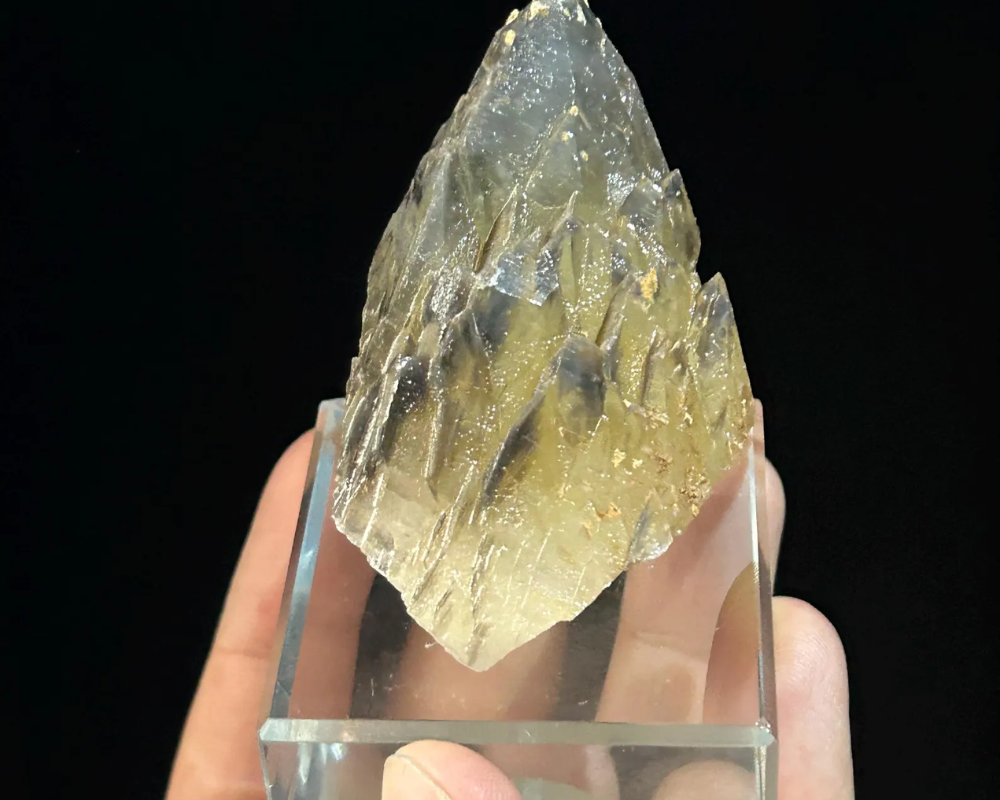
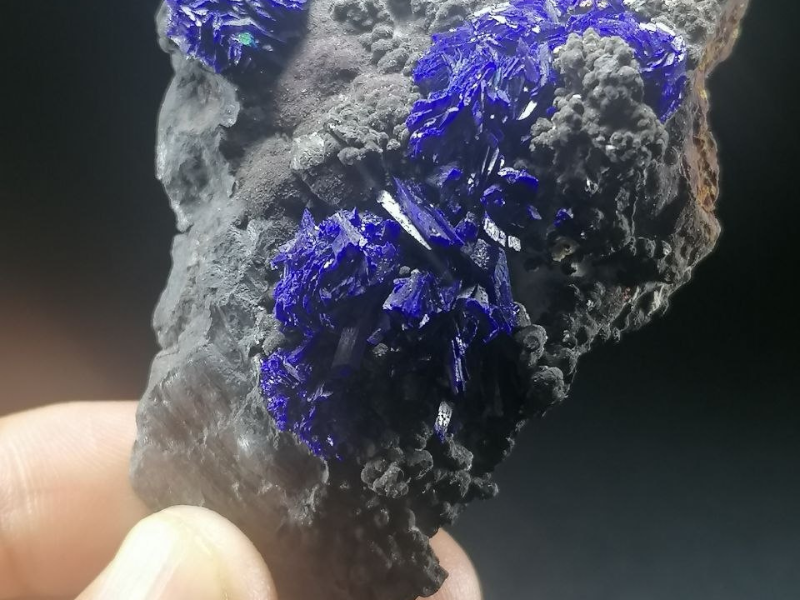
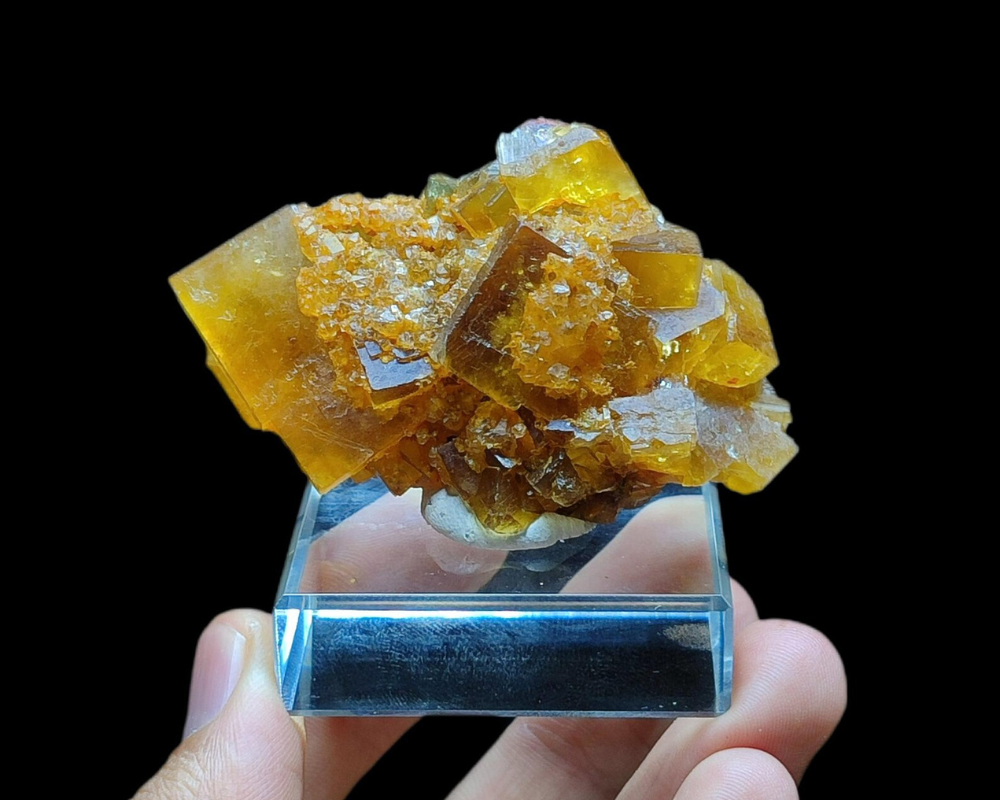
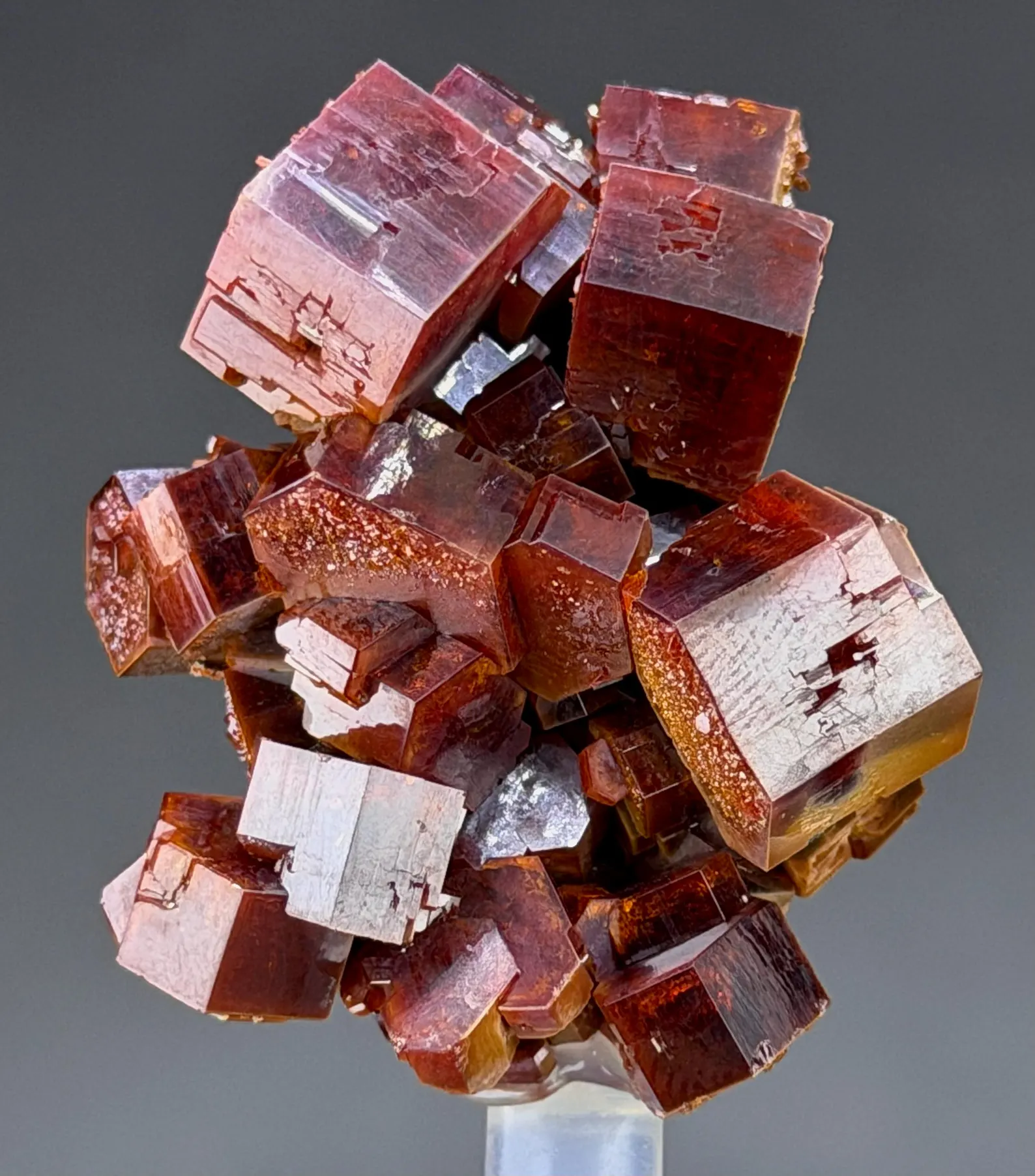
Vanadinite is one of the most distinctive secondary lead minerals in the world. Famous for its vivid red, orange-red and brown crystals, it is especially important to mineral collectors and mineralogists studying the oxidation zones of lead deposits. Mibladen in Morocco is one of the world’s best-known localities for exceptional vanadinite specimens.
What Is Vanadinite?
Vanadinite is a secondary lead vanadate mineral with the ideal chemical formula Pb5(VO4)3Cl. It belongs to the apatite group and crystallizes in the hexagonal crystal system. The mineral is particularly recognizable because of its bright red, orange-red, red-brown and sometimes yellow crystals.
Vanadinite forms mainly in the oxidized portions of lead-bearing ore deposits. Its formation is associated with the weathering and alteration of primary lead minerals in environments where vanadium and chlorine are available.
Vanadinite Mineral Properties
The following properties represent the principal mineralogical characteristics of vanadinite.
| Property | Description |
|---|---|
| Chemical composition | Lead, vanadium, oxygen and chlorine |
| Ideal formula | Pb₅(VO₄)₃Cl |
| Crystal system | Hexagonal |
| Crystal class | 6/m |
| Space group | P6₃/m |
| Hardness | 2.5 to 3 on the Mohs scale |
| Specific gravity | Approximately 6.88 measured and 6.95 calculated |
| Luster | Sub-adamantine to resinous |
| Color | Orange-red, red-brown, brown, bright red, yellow and related shades |
Crystal Structure and Chemistry
Vanadinite has the apatite-type structure. Its crystal structure contains lead cations together with vanadate groups and chloride ions. This structural arrangement explains its relationship with other apatite-group minerals, particularly pyromorphite and mimetite.
In natural specimens, vanadinite may contain small amounts of elements such as phosphorus, arsenic and calcium. These substitutions can produce measurable chemical variations between specimens from different localities.
The ideal elemental composition by weight is approximately 73.15 percent lead, 13.56 percent oxygen, 10.79 percent vanadium and 2.50 percent chlorine.
| Element | Ideal Weight Percentage |
|---|---|
| Lead (Pb) | 73.150% |
| Oxygen (O) | 13.556% |
| Vanadium (V) | 10.791% |
| Chlorine (Cl) | 2.503% |
Vanadinite Crystal Habit
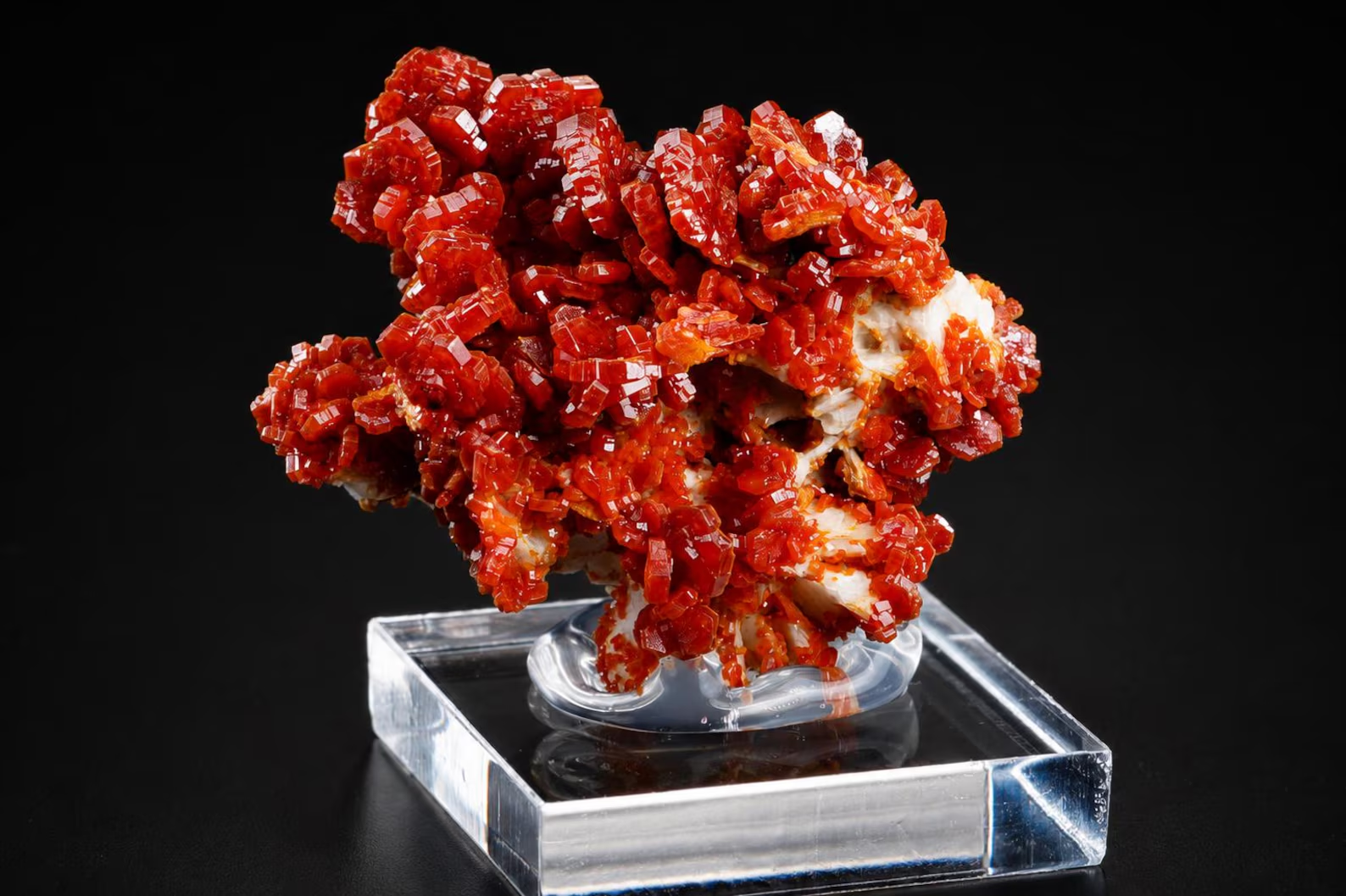
One of the most attractive characteristics of vanadinite is its crystal habit. Well-developed crystals are commonly hexagonal prisms and may occur as short, thick crystals or more elongated forms.
Other habits include tabular, acicular, fibrous, hairlike, rounded, globular and skeletal forms. The exact appearance depends on the geological environment and the conditions under which the mineral crystallized.
Color and Appearance
Vanadinite is best known for intense red and orange-red colors, although natural specimens can also be brown, yellow, pale straw-yellow, whitish or nearly colorless in transmitted light.
The strong color and high specific gravity make vanadinite particularly distinctive when compared with many other minerals found in oxidized lead deposits.
How Does Vanadinite Form?
Vanadinite is primarily a secondary mineral. It develops in the oxidized zones of lead deposits where the original ore minerals have been altered by weathering and circulating fluids.
Vanadium-bearing fluids can react with lead-rich materials under suitable chemical conditions. When chlorine is also available, vanadinite may crystallize from these fluids.
This process explains why vanadinite is commonly found together with other secondary minerals in the oxidation zones of lead deposits.
Vanadinite from Mibladen, Morocco
Mibladen is a famous mineral-producing district near Midelt in central Morocco. The locality is internationally recognized for exceptional specimens of vanadinite and other secondary lead minerals.
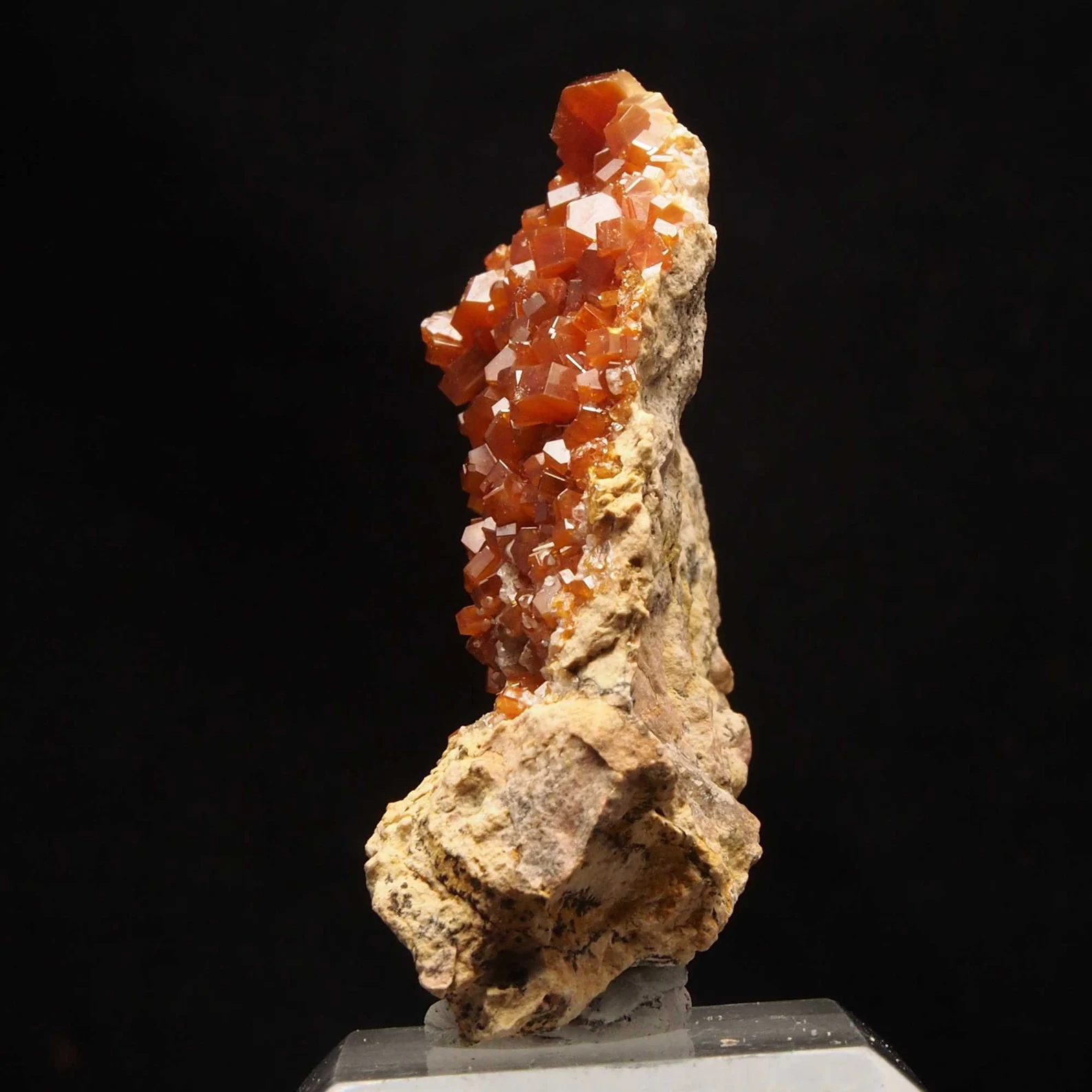
The mineral specimens from Mibladen are especially valued for their well-formed crystals, strong colors and associations with contrasting minerals such as baryte. These specimens have also been used in scientific mineralogical and crystallographic studies.
Vanadinite and Baryte
Baryte is one of the minerals commonly associated with attractive Mibladen vanadinite specimens. The contrast between pale baryte and strongly colored red or orange vanadinite crystals can produce highly aesthetic mineral specimens.
These associations are also scientifically useful because they provide information about the mineral-forming environment and the sequence of mineral deposition.
Vanadinite, Pyromorphite and Mimetite
Vanadinite, pyromorphite and mimetite are closely related minerals because they share the apatite-type structural framework.
Vanadinite
A lead chlorovanadate with the ideal formula Pb₅(VO₄)₃Cl.
Pyromorphite
A lead phosphate mineral belonging to the same broad structural family as vanadinite.
Mimetite
A lead arsenate mineral that is structurally related to vanadinite and pyromorphite.
Why the Relationship Matters
Chemical substitution between vanadate, phosphate and arsenate components helps explain compositional variation within this mineral group.
How to Identify Vanadinite
Identification should be based on a combination of properties rather than color alone. The most useful characteristics include crystal habit, color, luster, hardness, density and chemical composition.
- Examine the crystal habit. Hexagonal prismatic crystals are particularly characteristic.
- Observe the color. Strong orange-red and red crystals are common.
- Consider the luster. Fresh crystals may show a strong resinous to sub-adamantine appearance.
- Consider the high specific gravity. Vanadinite is unusually dense for a mineral of its size.
- Use analytical methods such as X-ray diffraction, Raman spectroscopy or chemical analysis when scientific identification is required.
Optical Properties
Vanadinite is optically uniaxial negative. Reported refractive indices include approximately nω = 2.416 and nε = 2.35, giving a birefringence of approximately 0.066.
| Optical Property | Value |
|---|---|
| Optical character | Uniaxial negative |
| nω | Approximately 2.416 |
| nε | Approximately 2.35 |
| Birefringence | Approximately 0.066 |
Unit Cell and Crystallography
Vanadinite crystallizes in the hexagonal system. Its crystal structure is commonly described using the space group P6₃/m.
| Crystallographic Parameter | Approximate Value |
|---|---|
| Crystal system | Hexagonal |
| Crystal class | 6/m |
| Space group | P6₃/m |
| a | 10.3174 Å |
| c | 7.3378 Å |
| Z | 2 |
Vanadinite as a Mineral Specimen
Vanadinite is highly valued by mineral collectors because of its combination of intense color, well-defined crystal forms and high density.
Mibladen specimens are particularly sought after because the locality has produced crystals with excellent color, morphology and associations with minerals such as baryte.
When evaluating a specimen, collectors commonly consider crystal quality, color, luster, damage, association minerals, locality information and overall aesthetics.
Handling and Safety
Vanadinite contains a very high proportion of lead. Mineral specimens should therefore be handled responsibly.
- Do not ingest mineral material or mineral dust.
- Avoid unnecessary grinding, cutting or crushing of specimens.
- Wash hands after handling specimens, particularly before eating.
- Keep specimens away from children and pets.
- Store specimens securely and avoid creating airborne dust.
These precautions are particularly relevant when specimens are being cut, polished, drilled or otherwise processed.
Why Mibladen Vanadinite Is Important
Mibladen vanadinite is important from both scientific and collecting perspectives. The locality provides an excellent example of secondary mineral formation in an oxidized lead-bearing environment.
Its specimens also demonstrate the remarkable diversity of mineral associations that can develop during the oxidation and alteration of ore deposits.
For collectors, the locality is especially significant because of the combination of intense color, distinctive hexagonal crystals and the frequent presence of contrasting matrix minerals.
Frequently Asked Questions
What is the chemical formula of vanadinite?
Where does vanadinite form?
Why is Mibladen famous for vanadinite?
What color is vanadinite?
How hard is vanadinite?
Is vanadinite safe to handle?
Conclusion
Vanadinite is a scientifically important and visually remarkable lead chlorovanadate mineral. Its hexagonal crystals, vivid colors, high density and relationship to pyromorphite and mimetite make it an important subject in mineralogy.
Mibladen, near Midelt in Morocco, remains one of the most famous localities associated with vanadinite specimens. The combination of exceptional crystal form, color and mineral associations has made Mibladen vanadinite highly recognizable among mineral collectors worldwide.
Understanding vanadinite requires looking beyond its appearance. Its chemistry, crystal structure, geological environment and mineral associations together explain why this mineral is one of the most distinctive products of oxidized lead deposits.