
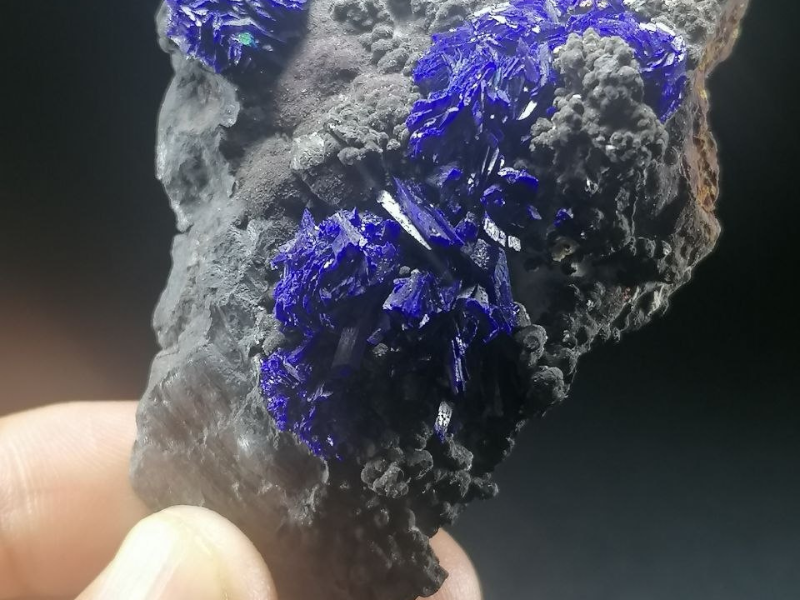
A natural Moroccan Azurite specimen featuring vivid blue crystal clusters on a natural matrix, collected from the Tounfit area of the High Atlas Mountains.
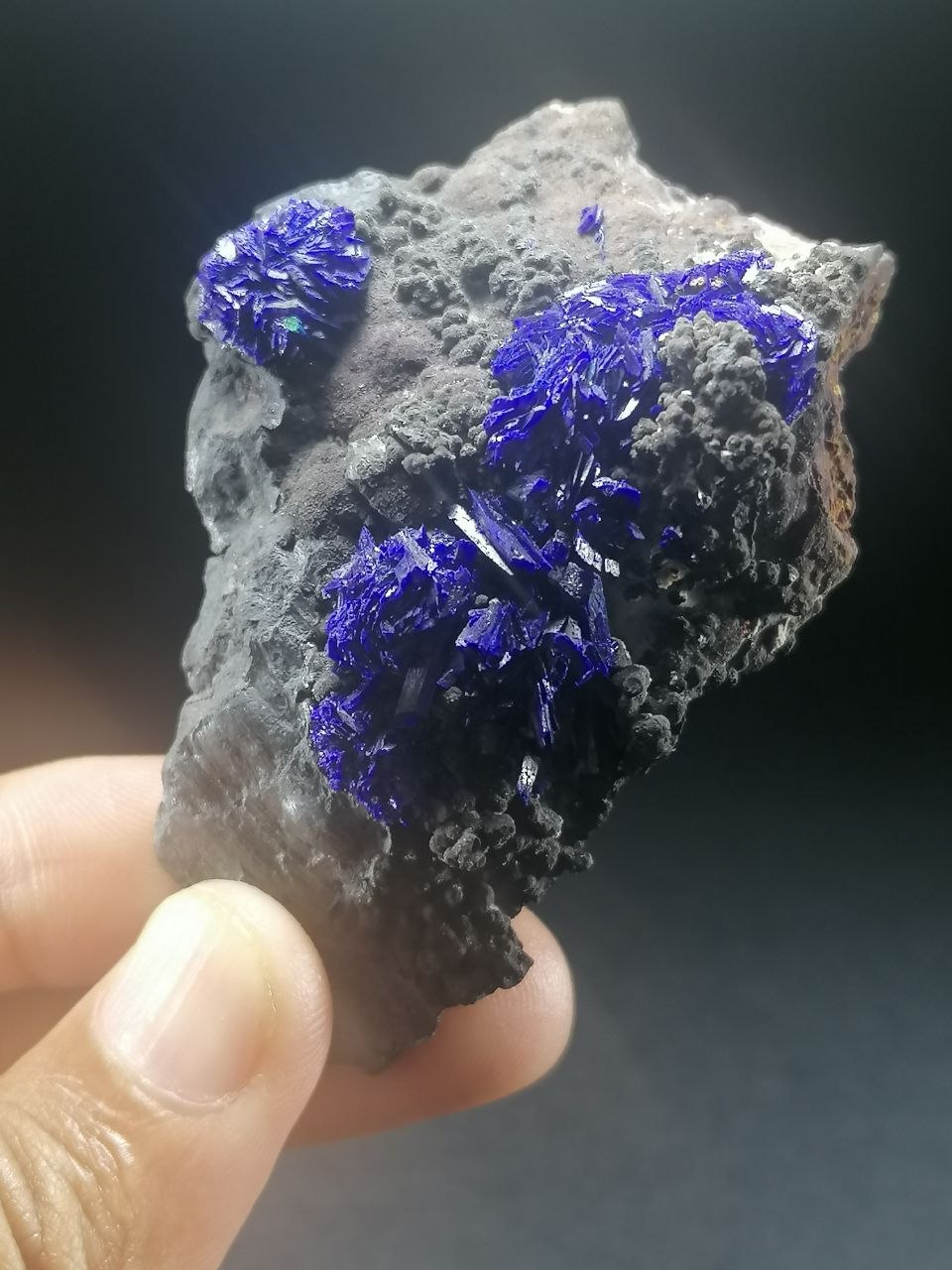
Natural Azurite Specimen from Tounfit, Morocco
This natural Azurite specimen comes from the Tounfit area of the High Atlas Mountains in Morocco. The specimen is currently available and is offered as a genuine natural mineral specimen for collectors, mineral enthusiasts, and anyone interested in Moroccan minerals.
The piece features several striking deep blue Azurite crystal clusters developed on a natural gray matrix. The intense blue color contrasts strongly with the surrounding matrix, giving the specimen a distinctive appearance and making the crystal groups easy to appreciate from the front.
Unlike commercially manufactured decorative objects, this is a natural mineral specimen. Its shape, matrix, crystal arrangement, and surface characteristics are the result of natural geological processes.
The specimen shown on this page is the actual piece offered for sale. The photograph is provided to give collectors a direct view of the mineral and its natural appearance.
What Is Azurite?
Azurite is a copper carbonate mineral known for its intense azure-blue to deep blue color. Its chemical formula is
Cu3(CO3)2(OH)2.
It is a secondary copper mineral that commonly develops in the oxidized portions of copper-bearing deposits. Azurite can occur as well-formed crystals, crystal aggregates, massive material, botryoidal forms, and radiating groups.
The deep blue color of Azurite is one of its most recognizable characteristics and is one of the main reasons the mineral is highly appreciated by mineral collectors.
Azurite belongs to the monoclinic crystal system and has a Mohs hardness of approximately 3.5 to 4. Its specific gravity is around 3.77, and its typical luster is vitreous.
Azurite Mineral Properties
The following table summarizes some of the principal mineralogical characteristics of Azurite.
| Property | Azurite |
|---|---|
| Mineral | Azurite |
| Chemical Formula | Cu3(CO3)2(OH)2 |
| Mineral Class | Carbonate |
| Crystal System | Monoclinic |
| Color | Azure blue to deep blue |
| Luster | Vitreous |
| Mohs Hardness | 3.5–4 |
| Specific Gravity | Approximately 3.77 |
| Crystal Habit | Tabular, prismatic, radiating, massive and other forms |
| Geological Setting | Oxidized zones of copper-bearing deposits |
| Locality | Tounfit, Midelt Province, Morocco |
Why Is Azurite Blue?
The remarkable blue color of Azurite is one of its defining visual characteristics. Copper is an essential part of the mineral’s chemical composition, and the interaction of copper with the carbonate and hydroxyl groups within the crystal structure contributes to the mineral’s characteristic coloration.
Depending on crystal quality, lighting, surface condition, and the degree of development of the crystals, Azurite can appear in shades ranging from lighter blue to intense azure and very dark blue.
In the specimen shown here, the Azurite crystals provide a strong contrast against the gray natural matrix. The combination of the vivid blue crystals and the rough natural host material gives the specimen a distinctly geological appearance.
How Does Azurite Form?
Azurite is generally formed as a secondary mineral in the oxidized zone of copper deposits. When copper-bearing minerals interact with oxygenated groundwater and carbonate-rich conditions near the Earth’s surface, new secondary minerals can form.
Under suitable chemical conditions, Azurite can crystallize in cavities, fractures, and open spaces within the host rock. These environments can allow crystals to develop recognizable faces and form groups or aggregates.
The final appearance of an Azurite specimen depends on many geological factors, including the chemistry of the mineralizing fluids, available space for crystal growth, temperature, pressure, host rock, and the availability of copper and carbonate.
Azurite and Malachite: What Is the Difference?
Azurite and Malachite are closely related copper carbonate minerals, but they are not the same mineral.
Azurite has the chemical formula
Cu3(CO3)2(OH)2,
while Malachite has the formula
Cu2CO3(OH)2.
Their colors are also very different. Azurite is characteristically blue, while Malachite is typically green. Both minerals are important secondary copper minerals and can occur in the same geological environments.
| Property | Azurite | Malachite |
|---|---|---|
| Color | Blue to deep azure blue | Green |
| Formula | Cu3(CO3)2(OH)2 | Cu2CO3(OH)2 |
| Mineral Class | Carbonate | Carbonate |
| Crystal System | Monoclinic | Monoclinic |
| Typical Geological Setting | Oxidized copper deposits | Oxidized copper deposits |
Why Are Azurite and Malachite Often Found Together?
Azurite and Malachite commonly occur together because both are secondary copper minerals that can form in the oxidized parts of copper-bearing deposits.
Their relationship is particularly interesting because changes in the chemical conditions of the mineral-forming environment can favor one mineral over the other. Azurite may also alter to Malachite under suitable conditions, and specimens showing this relationship are especially interesting to mineral collectors.
It is important, however, to distinguish between the general geological relationship of Azurite and Malachite and the specific mineral composition of an individual specimen. The specimen offered on this page is presented as an Azurite specimen from Tounfit.
Azurite from the Tounfit Area of Morocco
Tounfit is located in the High Atlas of Morocco, within Midelt Province in the Drâa-Tafilalet Region. Mineralogical databases document Azurite occurrences in the Tounfit area, including an occurrence at Jbel Masker, Tounfit Caïdat.
The Tounfit region and surrounding areas of the Moroccan Atlas are known for a variety of mineral occurrences. The geological diversity of the region has produced specimens that are of interest to both mineral collectors and students of mineralogy.
Moroccan minerals are particularly valued by collectors because the country has produced specimens representing a wide range of mineral species, crystal habits, colors, and geological environments.
The Azurite Crystals on This Specimen
The specimen presented here displays several prominent blue Azurite crystal clusters distributed across a natural gray matrix.
The largest visible cluster is positioned toward the center of the specimen, with additional blue crystal groups toward the upper portion. The crystals form radiating and closely associated aggregates that create an attractive three-dimensional surface.
The contrast between the dark blue Azurite and the gray matrix is one of the most noticeable features of the piece. The natural matrix also preserves the geological character of the specimen rather than presenting the crystals as isolated manufactured objects.
Because every natural mineral specimen develops under its own geological conditions, the arrangement of crystals, matrix texture, surface details, and minor imperfections are part of the individual character of the piece.
A Natural Mineral Specimen for Collectors
This Azurite specimen is suitable for collectors who appreciate natural minerals from Morocco and specimens with a strong visual connection to their geological origin.
It can be displayed in a mineral cabinet, private collection, study collection, office, or other protected display environment.
Azurite is relatively soft compared with many common minerals, with a Mohs hardness of approximately 3.5 to 4. For this reason, collectors should handle Azurite carefully and avoid unnecessary contact with hard surfaces.
How to Care for Azurite
Azurite should be handled with care because its relatively low hardness makes it more susceptible to scratching and mechanical damage than harder minerals.
- Handle the specimen carefully by its matrix rather than the most delicate crystal clusters.
- Avoid dropping or striking the specimen.
- Keep it away from harder minerals that could scratch its crystal surfaces.
- Display it in a stable and protected location.
- Avoid aggressive cleaning methods that could damage delicate crystals.
- Use gentle handling when moving the specimen between displays or storage.
The Actual Specimen Shown on This Page
The photograph above shows the actual Azurite specimen offered on this page. It is not a stock photograph or a generic photograph of another Azurite specimen.
The specimen is a natural piece featuring vivid blue Azurite crystal clusters on a gray natural matrix. Its current availability makes it possible for collectors interested in Moroccan Azurite to inquire directly about purchasing this particular piece.
Please examine the photographs carefully before purchasing. Natural mineral specimens can contain small chips, irregularities, matrix variations, and other features resulting from their natural formation and extraction.
Azurite and Malachite for Sale
This natural Azurite specimen from the Tounfit area of Morocco is currently available for sale.
If you are looking for Azurite for sale, a natural Azurite specimen from Morocco, or a collector specimen from the High Atlas region, you can contact us directly through WhatsApp for availability, dimensions, price, shipping information, and additional photographs.
Why Collect Moroccan Azurite?
Moroccan mineral specimens are appreciated for their geological diversity and for the distinctive crystal forms found in several mineral-producing regions of the country.
For collectors, locality information is an important part of a mineral specimen’s identity. A specimen is not only a collection of crystals. It also represents a geological environment, a locality, and a particular episode of mineral formation.
This Azurite specimen connects the collector with the mineralogical heritage of the Tounfit area of the Moroccan High Atlas.
FAQ
What is Azurite?
Azurite is a blue copper carbonate mineral with the chemical formula Cu3(CO3)2(OH)2. It is commonly found in oxidized zones of copper-bearing deposits.
What color is Azurite?
Azurite is best known for its azure-blue to deep blue color. The exact appearance can vary depending on crystal development, surface condition, and lighting.
Is Azurite the same as Malachite?
No. Azurite and Malachite are different copper carbonate minerals. Azurite is typically blue, while Malachite is typically green. They can occur together in the same geological environment.
Where does this Azurite specimen come from?
This specimen is from the Tounfit area of the High Atlas Mountains in Morocco.
Is this exact specimen available for sale?
Yes. The specimen shown on this page is currently available. Contact us through WhatsApp for the current price, dimensions, shipping information, and additional photographs.
How can I purchase this Azurite specimen?
You can contact us directly through WhatsApp to discuss the specimen and purchase details.
The specimen presented here combines vivid blue Azurite crystal clusters with a natural gray matrix and comes from the Tounfit area of Morocco’s High Atlas Mountains.
For collectors looking for a natural Moroccan Azurite specimen, this piece offers both visual appeal and a documented geological locality. The actual specimen shown above is available for purchase.
For price, dimensions, shipping details, or additional photographs, please contact us directly on WhatsApp.
Azurite and malachite for sale
Mineral: Azurite Chemical Formula: Cu₃(CO₃)₂(OH)₂ Locality: Tounfit area, High Atlas Mountains, Morocco Province: Midelt Province Country: Morocco Specimen Type: Natural mineral specimen Color: Deep blue to azure blue Matrix: Natural gray mineralized matrix Availability: Available
Product Brand: Minerals
Product Currency: USD
Product Price: 100
Product In-Stock: InStock